
Web Design Company Nagpur: Reviews & Contact Number (2026)
15 Oct, 2026
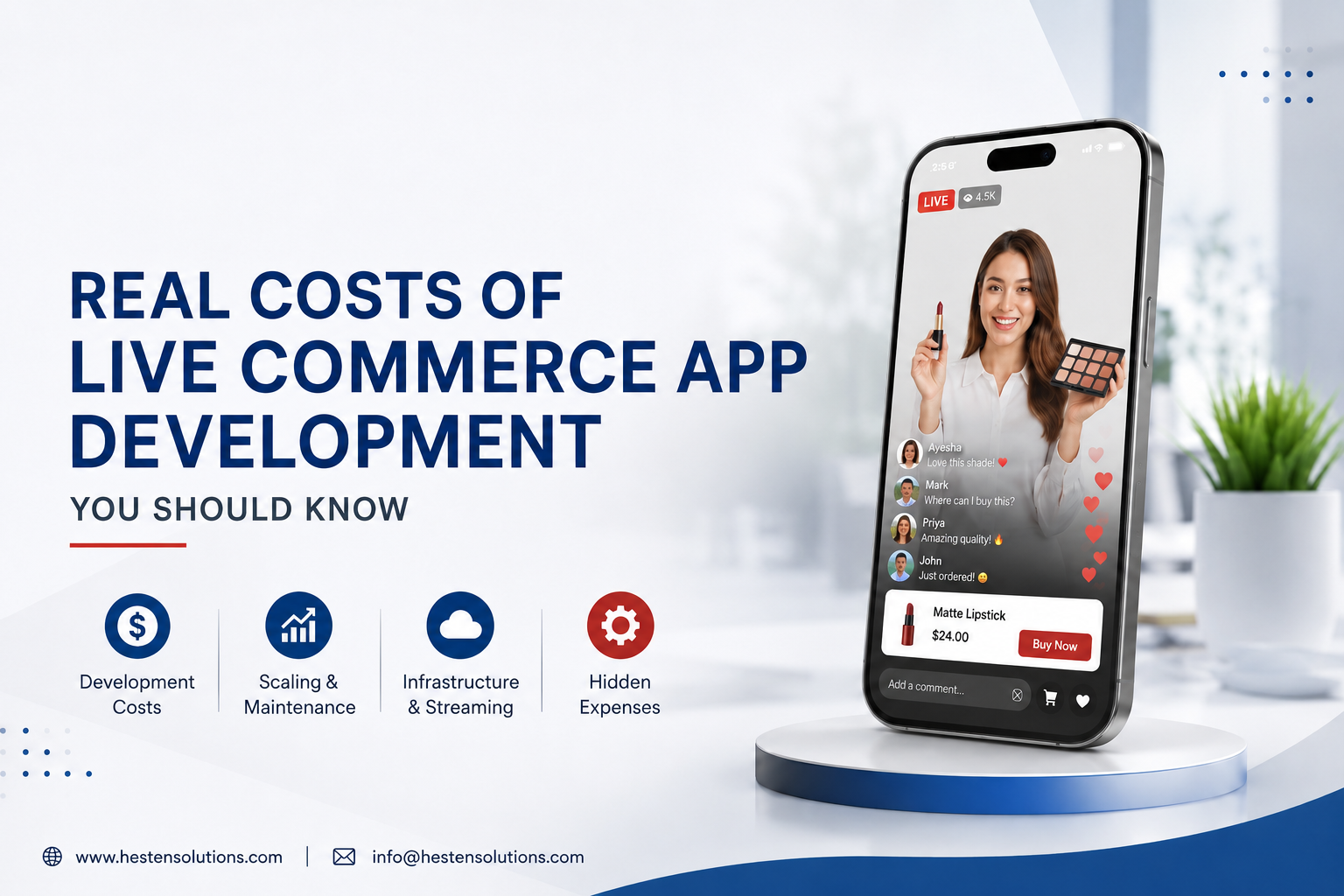
Live commerce is no longer a trend, it's becoming the future of eCommerce. With platforms like TikTok Shop and real time shopping experiences driving massive engagement, entrepreneurs are rushing to build their own live shopping apps.
But here is the big question
In this comprehensive global guide, we’ll break down every cost factor including those most developers overlook so you can plan your budget realistically and strategically.
| App Complexity | Estimated Cost |
| Basic MVP (essential features only) | $25,000 – $40,000 |
| Mid-Level Scalable Platform |
$40,000 – $80,000 |
| Enterprise-Grade Live Commerce App | $80,000 –$150,000+ |
Actual cost varies widely based on features, technology stack, country of development, and on going operational costs.
A live commerce app combines live video streaming + eCommerce + real-time engagement. Sellers or influencers showcase products during live sessions while users interact, ask questions and purchase instantly without leaving the stream.
This requires far more technical power than a normal eCommerce app.
Here’s the expanded list of major cost drivers
This is the single biggest expense in live commerce apps.
You need:
Low-latency video streaming
Adaptive bitrate (quality adjustment)
Scalable streaming servers
CDN & bandwidth costs
Live reaction & comment synchronization
Streaming architecture is more complex than regular video modules on social apps. This alone can push budgets up by 30–40% or more.
Unlike static eCommerce, live commerce requires:
In-stream product tagging
Pop-up cart overlays
Flash deals & limited-time offers
Purchase buttons mid-video
These require tight sync between video, UI, and backend systems — increasing design and development complexity.
Live commerce apps often include:
Real-time polls & quizzes
Chat reactions & emoji floods
Gamified badges & loyalty rewards
Social sharing & referral triggers
These features increase frontend complexity and backend AI/analytics costs.
If your platform supports multiple sellers, you’ll need:
Seller dashboards
Approval workflows
Commission management
Real-time inventory sync
Return/refund handling logic
Marketplace logic adds non-trivial backend systems often more expensive than a simple single-vendor setup.
This is one of the hidden costs that often breaks budgets.
Before launch, your app must be tested with:
Thousands of concurrent users
Peak streaming loads
Rapid buy button storms
Real load testing requires specialized tools, engineers, and repeat cycles easily adding 10–20% to the budget.
Live chats generate tons of data and many platforms end up spending heavily on:
AI-powered content filters
Rapid reporting and removal systems
Human moderators (for quality control)
Spam protection & user blocking
This is a hidden but essential ongoing cost many early founders forget.
Live commerce requires:
Global payment gateway integrations
Auto split payouts between sellers and platform
Wallet systems
Subscription billing
Refund & chargeback logic
These integrations require deep backend and security work especially for global compliance.
If your app targets global markets, you must adhere to regulations like:
GDPR (Europe)
CCPA (California)
PCI DSS (payments)
Data localization laws (UAE etc.)
Compliance auditing and legal consultation is expensive and non optional.
|
Component |
Budget Impact |
|
UI/UX Design |
Moderate |
|
Frontend (iOS, Android, Web) |
Significant |
|
Live Streaming Backend |
Very High |
|
Marketplace Logic |
High |
|
Load Testing |
Moderate |
|
Security & Compliance |
High |
|
Analytics & Reporting |
Moderate |
|
Content Moderation |
Moderate |
Streaming and marketplace systems consistently consume the largest portion of the budget.
|
Feature |
eCommerce |
Live Commerce |
|
Video Streaming |
❌ |
✔️ |
|
Flash Sales |
✔️ |
Enhanced |
|
Interactive UI |
Low |
High |
|
Real-Time Engagement |
❌ |
✔️ |
|
Marketplace Complexity |
Optional |
Often Required |
|
Load Handling |
Low |
Very High |
Live commerce invariably costs more but its conversion rates and engagement also outperform standard eCommerce apps.
This is the biggest cost driver.
Live commerce apps require:
Low-latency streaming
High concurrent user handling
Real-time comments & reactions
Adaptive bitrate streaming
Streaming servers, CDN usage, and bandwidth costs increase significantly as user numbers grow.
This alone can increase development and operational cost by 30–40%.
Unlike normal eCommerce apps, live commerce requires:
In-stream product tagging
One-click purchase overlay
Real-time inventory sync
Flash sale timers
Gamification (spin wheel, live polls)
These features require advanced backend logic and synchronization systems.
If your app allows multiple sellers, you’ll need:
Vendor dashboards
Commission management
Split payments
Seller analytics
Approval workflows
Marketplace logic adds complexity and cost.
Live commerce apps often include:
Instant checkout
Multiple payment methods
Wallet system
Refund automation
International currency support
More gateways = more integration + more compliance.
If your live session goes viral, can your app handle 50,000 users at once?
To support scalability, you need:
Load balancing
Cloud auto-scaling
Database optimization
Performance monitoring tools
Cutting corners here leads to crashes during peak sales.
Because live commerce handles payments and user data, you need:
End-to-end encryption
Secure payment compliance
Fraud detection
Moderation tools
User verification systems
Security is not optional it’s essential.
Here’s where budgets often go wrong
You pay monthly for bandwidth & CDN usage.
Big campaigns = higher server bills.
Live chats need filtering & AI moderation.
Regular updates are mandatory for performance & compliance.
User acquisition often costs more than development.
If you want to optimize budget without compromising quality:
✅ Start with MVP (essential features only)
✅ Use scalable cloud infrastructure from day one
✅ Avoid over-customization initially
✅ Choose ready-made framework solutions
✅ Focus on one target market first
Smart planning can reduce 20–30% unnecessary expenses.
Absolutely, building a live commerce app is worth it in 2026 and here are the reasons why it is.
Higher engagement time
3x–10x better conversion rates
Real-time impulse buying
Influencer-driven trust
Better customer retention
If executed properly, ROI outweighs development cost.
Before you finalize your budget, you need to think and finalise some factors as
✔ Define your monetization model
✔ Identify your target market
✔ Decide MVP vs Full Platform
✔ Plan for scalability
Live commerce app development in 2026 is an investment not an expense.
The cost is higher because:
Real-time infrastructure is complex
Scalability matters
Engagement features are advanced
Marketplace systems require logic
But when built strategically, a live shopping app can become a powerful revenue engine.
How much does it cost to build a live commerce app globally?
The global cost to develop a live commerce app ranges between $25,000 and $150,000+, depending on features, streaming infrastructure, scalability, and marketplace complexity.
Why is live commerce app development more expensive than traditional eCommerce?
Live commerce apps require real-time video streaming, interactive shopping overlays, concurrent user handling, and advanced backend systems — which significantly increase development and server costs.
Can I start with a minimum viable product (MVP)?
Yes. A live commerce MVP with core features like streaming, product tagging, checkout, and basic seller management can reduce initial investment while allowing future scalability.
What are the monthly operational costs?
Operational costs include streaming bandwidth, cloud hosting, CDN usage, payment gateway charges, maintenance, and marketing. These typically range from $1,000 to $10,000+ depending on traffic.
Is live commerce profitable globally?
Yes. Live commerce platforms report significantly higher engagement and conversion rates compared to traditional eCommerce, making them highly scalable and profitable in global markets.
.jpg)